Wednesday, March 21, 2007

Ellsworth Brings Landscape Architect Olmstead to Chicago World's Fair

Some of you will have read Erik Larson's national bestseller, The Devil in the White City (2003), and are aware of the key role James W. Ellsworth played in convincing Frederick Law Olmstead to serve as landscape architect for the 1893 world's fair. Known as the World's Columbian Exposition, the fair was hosted in Chicago and construction of the exposition site focused the talents of America's most notable architects of the day, including Chicago architect Daniel Burnham. Burnham was the exposition's principal director, and Ellsworth, a friend of Burnham's, was on the exposition's board of directors.

It was in that capacity as a board member that Ellsworth approached Olmstead and lobbied the famous landscape designer to join the effort to make the World's Columbian Exposition a spectacular achievement designed to showcase America's architectural and engineering prowess. According to Larson's account of Ellsworth's July 1890 meeting with Olmstead, "Ellsworth assured Olmstead that by agreeing to help, he would be joining his name to one of the greatest artistic undertakings of the century." For more on Ellsworth's involvement in the 1893 exposition, see pages 48-52 of The Devil in the White City.

Wednesday, January 31, 2007

WRA Alum Wins Oscar for Sunset Boulevard

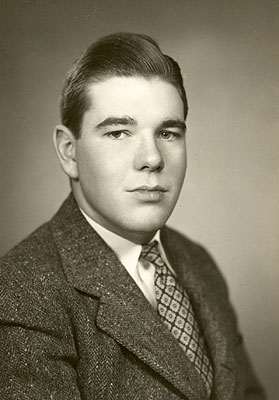
It's fairly well known that WRA has a number of alumni who are active either on Broadway or in Hollywood as actors, producers, writers, or directors. But not many know that Donald M. "Mac" Marshman '41 actually won an Oscar in 1951 for the screenplay for Sunset Boulevard, one of the most celebrated movies in American film history.

Ten years earlier at WRA, Marshman won accolades
for Mixed Company, a musical comedy he had both written and directed. It was later said that Mac took more curtain calls than any of the players themselves. He went on to Yale where he wrote a column for the Yale News. He graduated in 1944 and joined Life magazine where he worked in several departments before being named movies editor. After two years at that post, he went on to other assignments, then moved over to Time magazine where he continued to review films.

In 1948 Billy Wilder and Charles Brackett invited Marshman to Hollywood. He left
Time and joined the writing team as a full collaborator. The three men devoted a year to writing the story and screenplay for Sunset Boulevard featuring Gloria Swanson and William Holden in the lead roles. At the Academy Awards ceremony in March 1951, all three writers took home a gold statuette when Sunset Boulevard won for best screenplay. Marshman worked on several other films for both Paramount and RKO Pictures.

The talented writer eventually returned east to be closer to both New York City and Yale University. He and his wife, Ann, became parents to four children. Marshman now lives in retirement in Darien, Connecticut.

A couple of years ago, a screenwriters' group put Sunset Boulevard near the top of the list of the 100 best American films. During February the Cleveland Institute of Art's Cinematheque will host a series of "Screen Gems" in its film classics program. The picture selected to kick off that series is the one that WRA's D. M. Marshman helped to write. "Tell Mr. De Mille that I'm ready for my close-up," says Norma Desmond (Gloria Swanson) at the end of this unforgettable film. It's reassuring to know that this screen classic still ranks up there with the very best.

Tuesday, January 23, 2007

A Photo for a Family Album

As the result of a browser discovering this blog, I can share some details about the lives of the Berry brothers. A granddaughter of Sylvester Wiley Berry found this site and contacted me about her grandfather and his older brother. I was able to confirm that in the 1880s both attended Western Reserve Academy and then Adelbert College of Western Reserve University (Cleveland).

The older brother, John Faris Berry, was born in 1866 in West Liberty, West Virginia. He graduated from WRA in 1884 and went on after college to a distinguished career as a classics teacher, an ordained minister serving churches in Michigan and Ohio, and a registrar for the School of Dentistry at WRU. John Faris Berry responded to alumni surveys in 1906 and again in 19
33. With his 1933 survey, he included this note: "I little realized how much Western Reserve Academy was doing for me. As I grow older I wonder still more if I realize or appreciate how great is the debt that I can never repay to Western Reserve Academy and its teachers." Newton B. Hobart was the school's headmaster when both brothers were students.

Berry retired to Arizona where he died in 1951 and was returned to Hudson for burial at Markillie Cemetery.

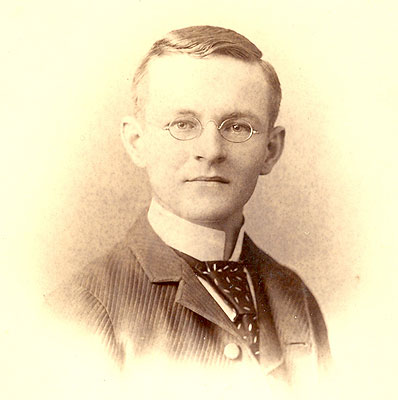
Sylvester Wiley Berry, the younger of the two, was born in 1868 and graduated with the WRA class of 1889 as one of just 16 seniors -- 13 men and three women. He earned his degree from Adelbert College in 1893, then went to New York City where he had a career as a teacher and a camp director. In 1926 he was still teaching at the Irving School in New York, but two years later he died at the age of 60.

Archivist's Note: In 1885, WRA began requiring students to have a senior photo, so I have a good photo of Sylvester Berry taken in 1889. Since his descendant had no picture of her grandfather as a young man, I was pleased to be able to send her the one shown here to share with family members.

Thanks for the inquiry!

Dana A. Schmidt '33: WWII War Correspondent

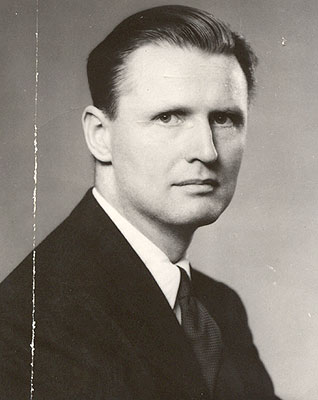
The news coverage of R. W. "Johnny" Apple '52 following his death in late 2006 reminded me that an earlier alumnus, Dana Adams Schmidt '33, garnered similar laurels in the world of journalism, but retired from the field and was little noted when he passed away in 1994. The fact that Schmidt covered the Middle East from posts in Jerusalem and Beirut and wrote books about that region may be enough reason to revisit his career.


Dana Schmidt spent nearly 10 years of his boyhood in schools across Europe. When he came
to WRA, it was reported that "he speaks like a furrinner." Schmidt was on the soccer and track teams while at WRA and wrote for the Reserve Record when LaRue Piercy was the faculty moderator. He was Record editor his senior year.

Schmidt went on to Pomona College in California where he was a feature editor and wrote a daily news column for the campus paper. Following graduation, he worked briefly as a reporter in Los Angeles before entering Columbia University for a master's in journalism.

In June of 1938, Schmidt was awarded the Pulitzer Traveling Scholarship which allowed him to go to Germany as an intern for United Press International. He was still in Berlin a year later when Germany invaded Poland and World War II began. He wrote WRA to say that he had a "terrific beat" with UPI and was living in a Berlin apartment with two attaches from the American Embassy.

As fighting increased, Schmidt was relayed to safer locations in Europe including Istanbul and Cairo, but he continued to report some of the war's leading stories. In 1943, he left UPI to join the New York Times.

After the Normandy invasion in 1944, Schmidt was covering the activities of the Free Fr
ench. He wrote: "This correspondent reached the capital of collaborationist France (Vichy) through the assistance of the French underground--the first American reporter here." His story grabbed headlines in the Akron Beacon Journal and other papers worldwide.
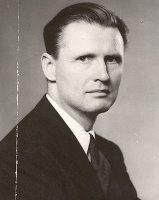
When WWII ended, Schmidt was posted to Paris, Frankfurt, Athens, Vienna, Prague, and later in the Middle East in Cairo, Beirut and Jerusalem. One of his most adventurous journeys was to Kurdistan in northern Iraq where he covered the Kurdish rebels. To get there, he borrowed a mule and secretly entered forbidden territory. His report on this regional conflict helped him win the Overseas Press Club's George Polk Award in 1963 and was published as Journey Among Brave Men (1964). Later, while covering a civil war in Yemen, Schmidt broke his neck in a Jeep collision and had to be airlifted out. He continued sending dispatches from a Beirut hospital. Some of this is in his book, Yemen: the Unknown War (1968). His final book was called Armageddon in the Middle East (1974).

Schmidt's last foreign assignment was to Beirut where he was in 1972 when he decided to leave the New York Times to join the Christian Science Monitor and do freelance writing. During the early 1970s, Schmidt's son, Dana Adams Schmidt, Jr. briefly attended WRA. Schmidt had retired from journalism and was living in Bethesda, Md. when he died at age 78 in 1994. His books are in the Ong Library's Alumni Authors Collection.

Monday, December 11, 2006

The Year The Gathering was Filmed at WRA

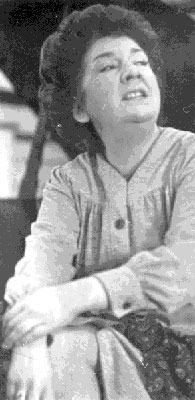
About this time of year, people in Hudson start asking about The Gathering, the Emmy-award winning Christmas classic that was filmed mostly on our campus early in 1977 and then released as a television film in December of that year. It was shown during the Christmas season for many years, but now is hard to find as it was only issued in VHS and has yet to come out in DVD format. The production brought acclaimed film stars Edward Asner and Maureen Stapleton to Hudson along with Stephanie Zimbalist and several other young actors. The film was written by Academy-award winner James Poe (They Shoot Horses, Lilies of the Field, other credits) and directed by Randal Kleiser. It originally aired on ABC television.

The story of The Gathering takes place during the Christmas season in a small New England town w
here the Thornton family are attempting a reunion with Adam Thornton, who had left his wife and family to pursue a successful career in business. Now terminally ill, he is invited back to his home to be with his estranged wife and four children, some of whom now have children of their own. Asner was cast as the crusty Adam Thornton while Maureen Stapleton portrayed his forgiving wife, Kate.

WRA's Pierce House had a leading role of its own as the family home, and for the month of February, 1977, Headmaster Hunter M. Temple an
d his family needed to move out while the film crew moved in and did some redecorating to meet the the requirements of the story. Several scenes in the film take place in or just outside Pierce House including the climactic moment when the family is reunited for a Christmas dinner served in the dining room with all participants gathered around the table. It's a heart-wrenching scene in this beloved film.

Another scene shows a
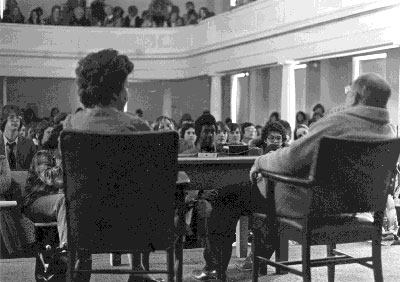
group of carolers gathered outside the door singing in the snow. These carolers included WRA's own Frank Longstreth, Rollin Waite, Robert Pryce, Sue Donnelly, Lee Turner, Janet Stone, Jean Conly and others. Even Hal and Sue Donnelly's dog made an unexpected appearance during the caroling scene, and Ed Asner called him "Spot." Hudson resident John Hubbard, father of Mary Hubbard Black '76, had a speaking role as the family minister. Priscilla Graham, mother of James A. Graham '70, and the late Cynthia Longstreth also had bit parts in the film. While the cast was on campus, they took lunch in Ellsworth Hall, and when the film was completed, Asner and Stapleton gave a memorable school assembly in the Chapel. Only a few photos remain from that event, although we suspect that several alumni have personal photos in their collection of the film stars or of that assembly.

In 1997, I taped a segment about The Gathering for Hudson CableTV and tried to get permission to use a moment or two of clips from the film for our public access station, but Warner Brothers denied the use. Earlier this year, Rob Loos '77 of TLC Entertainment presented the John D. Ong Library with a fresh VHS of The Gathering and its sequel. There is no word about whether the movie will ever appear in DVD.

It would be interesting to hear from WRA alumni who were students on campus the year The Gathering was made.

Dutch Newspaper to Publish Story about WRA Bell

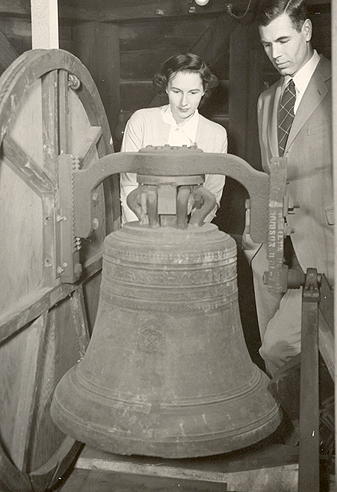
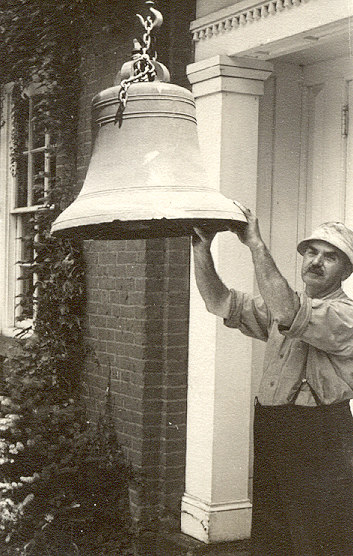
Recently a newspaper that serves Wester Souburch in Holland contacted the school to clarify the story about the bell at WRA's Chapel that was cast in their town and which was the catalyst for a relief effort at the end of World War II. The bell itself was cast by Ian Burerhuys in 1611 as the Latin inscription clearly indicates. It was purchased by WRA benefactor James W. Ellsworth probably before 1900 and installed in a bell tower at his Hudson home, Evamere Hall. After his death in 1925, his estate, together with the bell, became the property of WRA.

In the summer of 1944, a crack was discovered in an old bell that had hung in the Chapel tower for nearly 90 years. That particular bell was cast in
Troy, New York, in 1853. Since it needed to be replaced, the decision was made to bring the Wester Souburch bell from Evamere Hall and place it in the Chapel tower. On July 22, 1944, a recording was made of the last striking of the hour and a brief ceremony, presided over by WRA Dean Harlan N. Wood, was held as the old bell was taken down and replaced by the large Dutch bell.

Around t
he same time, the village of Wester Souburch itself was being inundated by water as the result of damaged dikes bombed during a standoff between German and American forces. Mrs. Helen H. Kitzmiller, Reserve's school historian and wife to longtime master, Harrison Kitzmiller, saw the stories about the plight of the people in this village, and because our bell had been made in that town, decided to launch a relief effort on their behalf.

What began as a hands-across-the-sea effort on the part of the WRA community became an effort that involved the whole town of Hudson for a period of about five years. Each spring there
was a kind of fair held on the WRA campus for the benefit of Wester Souburch.

When the Kitzmillers retired from W
RA in 1954, they decided to travel abroad and were invited to Holland to accept honors from the Dutch government and the people of Wester Souburch. They went there in December of 1955 to accept the award, and while traveling in Spain a month later, Mrs. Kitzmiller took ill and died in Barcelona. Mr. Kitzmiller returned to Columbus where he had grown up, and lived there until his death in 1978.

By coincidence, the same week I heard from the Dutch newspaper, I
was contacted by a cousin of Helen Kitzmiller, who will be coming to Hudson next spring to look at the Kitzmiller scrapbooks in the WRA Archives. Meanwhile, the bell article by Franz van der Brink will be published in Holland on or around December 16, 2006.

Tuesday, November 28, 2006

Another House Moves to Campus

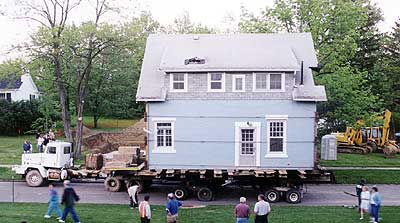
For the past month, we have watched the slow move of a large house from Aurora Street to a hilly location on the north end of the WRA campus. For many years this house, built in the early 1960s, stood at 301 Aurora Street with its back to our property. When the new owner proposed that the house be demolished in order to make way for a larger one, WRA was contacted about accepting the residence as a gift. The house has now been successfully moved to its new position on our campus, and by next summer, should be ready for a faculty family.

It was not all that long ago that anoth
er house, the "Brick Academy," home to a girls' seminary in the mid-19th century, was moved from lower Aurora Street where it had stood next to the present Congregational Church since 1847. On Saturday, May 13, 2000, the structure began to make its way a quarter mile to a new location just behind the Knight Fine Arts Center on Oviatt Street. The move took all day. Once settled on a vacant Reserve lot, the structure underwent extensive restoration and received a kitchen and den addition to the rear of the house. It is now in use as a faculty residence.

In the past, other houses have been moved from our campus and at least two others were added. One house, known as
the Kippen house (from the owner's family name) was purchased by WRA benefactor James W. Ellsworth in 1921 and moved from the corner of Chapel Street and College to its present location at 156 Aurora Street. Another home that stood near the corner of Prospect and College Street was either moved or demolished in the early 1930s in order to provide a place for the building of Hobart House.

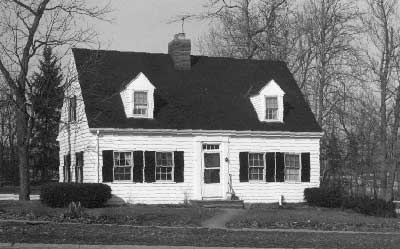
Two faculty homes on Hudson Street were purchased as kits from the Sears catalog, were shipped to Hudson by rail, stored behind the old Bicknell Gym, then brought over to Hudson Street and assembled on site. These include the house sometimes called the Hickok house which was marketed by Sears as "The Milford" (catalog #3385) and listed for $1359 to $1671. WRA bought the Cape Cod-style house shown in the 1934 catalog and erected it during the summer of 1935.

The second Sears catalog house is right next door and was marketed as "The Newcastle" (catalog #3402) , a large two-story house whose design was based on that of the 1730 Richards House in Litchfield, Ct. This model sold for $1576 to $1813 and probably was assembled in 1936. Both houses are so substantial in their framework and detailing that few would guess they had arrived on campus in a box, or rather a boxcar. Most of these Sears houses had 30,000 or more pieces and came with 750 lbs. of nails. Sears suggested they could be assembled in 90 days. So in the middle of the Depression years, WRA was able to build two fine houses for faculty use in a very economical way.

Thursday, November 16, 2006

Digging for Long-Lost Cabin in the Woods

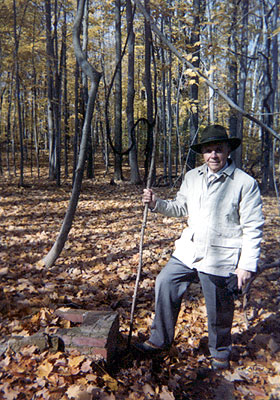
On a tip from Don Husat '64 about the ruins of an old dam in Hudson's Bicentennial Woods, we went on a field trip in early November with Lynna Piekutowski (who wrote Remembering the Boys) and discovered more than we had expected. After fording a couple of small brooks and climbing up an embankment, we looked carefully at the remains of the old stone dam probably built when this area was part of WRA benefactor James W. Ellsworth's East Woods.

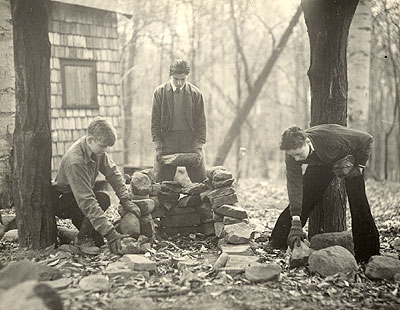
Then on a small rise a few hundred feet from the dam, we spied a group of bricks scattered about in the fallen leaves and went for a look. The more we dug into the old foundation, the more convinced we were that we had found the location of the Senior Cabin that had been built as a project by the Class of 1928. This class had the idea but needed to raise funds in order to build their hideaway in the woods. For about a year, they raised money by showing movies on the weekend and held other fund raisers that netted them the $645 to cover expenses for construction (this at a time when WRA tuition was $800 per year). In the fall of 1927, they began construction under the watchful eye of faculty member Ralph B. Simon. They were allowed to dismantle an old chicken coop at Evamere Farm and take the timbers, which became the framework for their cabin, out to the woods. We believe the location near the dam made sense, as there would have been a small pond there at the time, and nothing but woods and fields between the cabin and Evamere Farm near the intersection of Aurora and Hudson Streets.

We knew there were photos (below) in WRA Archives documenting this project, which was completed in the spring of 1928 when the class hosted He
admaster Ralph Boothby at a picnic at the site. The class planned to use it for reunion picnics, but deeded it over to the Class of 1929 and their successors. Our records show that it was used intermittently (no overnight stays without faculty supervision) through 1937.

By 1940, the cabin had fallen into disrepai
r and an effort was launched to repair it and put it back into use. Whether that ever happened is not known. World War II came along, and those boys who may have wanted to hike in the East Woods found themselves hiking across battlegrounds in Europe or the Pacific.

In 1951 the school began to
dismantle Evamere Farm, and by
1955 had begun selling off large parcels of the farm and the extensive woods that adjoined it. A significant portion of the farm property is now home to community schools and private residences.

In the early 1970s, the Hudson Park Board also acquired a section of this area. Later, during the American Bicentennial of 1976, the area encompassing the stone dam and Senior Cabin ruins was purchased and presented to the Park Board.

Monday, November 06, 2006

Robert S. Wilson, Board President

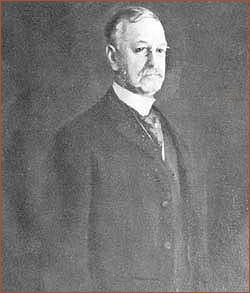
With the recent election of Mark R. Tercek '75 as president of the WRA Board of Trustees, we now have the ninth person to serve in this capacity since WRA was reorganized in 1916. It should be noted that among the previous eight board presidents, Robert S. Wilson holds the record for service which likely will not soon be surpassed. He was named president in 1941 following the sudden death of Warren M. Bicknell and served until his retirement in 1967.

Robert S. Wilson, son of a Presbyterian minister, went to Shadyside Academy and was a graduate of Princeton, class of 1910, where he was a member of both the wrestling and swimming teams. He had a long career with Goodyear in Akron, retiring as a vice president. But it is interesting to learn that he himself had a background in teaching, having taught Latin for two years at Lawrenceville before entering the field of business.

Mr. Wilson was elected to the WRA Board of Trustees in 1936, so he already had ten years of service by the time Dr. Hayden retired in 1946 and the search for a new headmaster began. It was at this point that fellow trustee Robert C. Brouse '31 proposed that Wilson himself be considered for the job. He declined the nomination, but was very much a part of the committee that brought John W. Hallowell to the school as headmaster. Together, Hallowell and Wilson worked for the well-being of WRA for the next 21 years. In 1963 the school dedicated Wilson Hall, the home of both the science department and the library, and named it in honor of the longtime board president. When the headmaster retired in 1967, Mr. Wilson also retired as board president and was succeeded by Robert C. Brouse. He passed away in 1970 at the age of 80.

Robert S. Wilson's two sons, John '35 and David '38, were both WRA graduates, and David
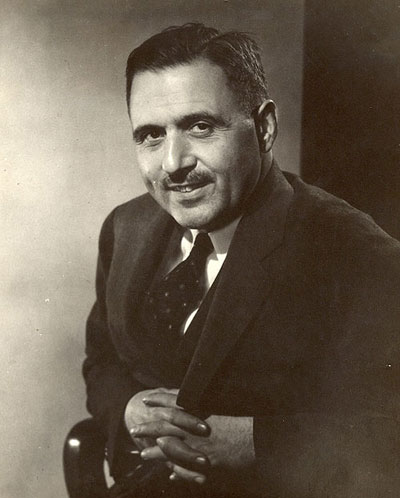
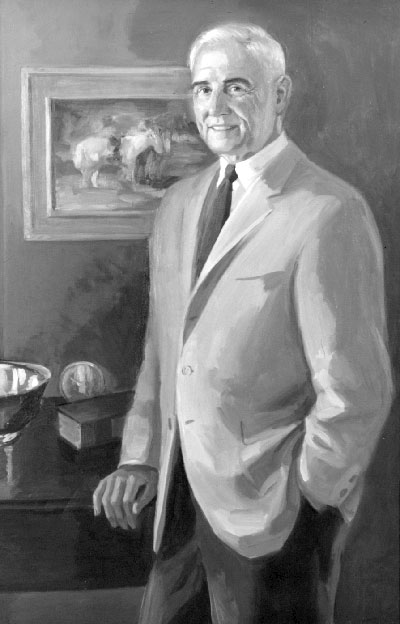
served on the Board of Trustees from 1958 to 1981, much of the time as board secretary. He now lives in Portland, Oregon, with his son, David, Jr.'63. Another son is Robert S. Wilson II '65. Many alumni are familiar with the portrait of Robert S. Wilson (on right) that graces Wilson Hall, but we are also posting a photo of him (above) taken about the time he became board president in 1941.

Upon his passing away in 1970, Wilson was eulogized by former Headmaster John W. Hallowell who wrote, "...all who knew him were infected with the joy and goodness he found in life. And joy was there because of his simple faith, his never-failing hope, his selfless love... " One can read more about Robert S. Wilson in Robert F. Pryce's book, The Hallowell Years (1980).

Tuesday, October 31, 2006

International Students - Part of Reserve History

When the WRA Board of Visitors gathered for their meeting at the end of October, the focus of their discussion was on international students at Reserve. International students have been an important part of the Reserve community for 3o years, but it may not be well known that even in the 19th century, our Preparatory School welcomed students from beyond our borders.

As early as the 1840s our school had a student from England, and several who came from what is now the province of Ontario, Canada. But in 1879 we welcomed two students from Japan: Mishitado Tsura of Tokyo and Rikizo Nakashima from Kyoto. They arrived just 11 years after the Meiji Restoration which opened up Japan to communication with the outside world after nearly 300 years of total isolation. Very few Japanese had the opportunity to study abroad in those early years, and those who were allowed to go understood that they were part of a mission to modernize their country while preserving its cultural values. Both students had attended schools that had connections with the U.S. In the case of Nakashima, he had attended the Doshisha School in Kyoto which had been founded by Christian missioners, a fact confirmed by his great-granddaughter who visited our campus in the spring of 2001.

Nakashima boarded at Mrs. Lord's house directly across the street from the school because Mrs. Lord had spent several years working as a missionary with her husband in India and elsewhere. One of Nakashima's accomplishments was finishing three years of the prep school in just one year. He also impressed Hudson residents by giving an illustrated lecture on Japan at the Adelphian Hall, then located downtown where the Saywell building is today. He went on to a notable career as an academic after completing degrees at Western Reserve University and Yale. He wrote several books and became a leading figure in Japanese education. He died in Tokyo in 1918.

Tuesday, October 24, 2006

WRA's Oldest Graduate Turns 103


It was a pleasure running into Ada Cooper Miller ’24 recently at Yours Truly Restaurant in Hudson where she was having lunch with members of her family who were visiting from the Albany area. She appears to be in good health and spirits a few weeks before she observes her 103rd birthday.

Born in England in 1903, Ada came to Hudson as an infant with her parents who were employed by James W. Ellsworth on his Evamere estate. Ada’s father was a gardener and landscape manager, and the family moved into a house on Franklin Street where Ada lived for nearly 99 years until going to the Elms Assisted Living here in Hudson. She graduated with the class of 1924, married Harry Cooper, raised a family and operated a successful florist business which she continued until about four years ago.

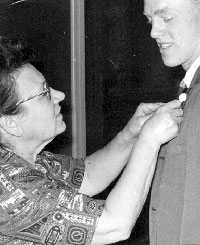
For many years Ada provided flower arrangements for the school, decorated the Chapel for commencement weekend, and was on hand on commencement morning to provide flowers and boutonnieres for the graduates. She served for 40 years on the Hudson Board of Education, was active in the Hudson Garden Club, Christ Episcopal Church, and the Hudson Senior Citizens. She was honored for her dedication to WRA on more than one occasion.

We send an affectionate salute to Ada and best wishes on her forthcoming birthday.

Lincoln's Chair Sits on Campus

It was my honor to attend a symposium in late October at Lincoln Memorial University in Harrogate, Tennessee. I was surprised to learn that Goodyear founder Frank A. Seiberling of Akron served as a trustee and board president at LMU during the 1910s and beyond, at exactly the same time he was serving on the Board of Trustees here at WRA. Seiberling made possible the expansion of the agricultural education program at LMU and was interested in WRA's Evamere Farm which was part of our curriculum from 1916 to 1953.
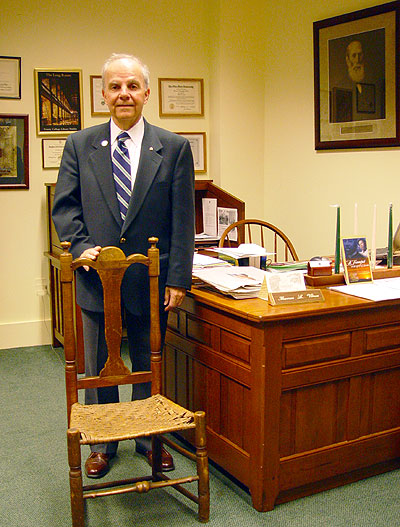
My visit to the Lincoln Museum at LMU also reminded me that our benefactor, James W. Ellsworth, was just 12 years old when Lincoln's train stopped in Hudson in 1861. We believe he was there, as it would have been a great occasion for the town that had voted solidly for Lincoln in the election of 1860. Ellsworth attended our school in the late 1860s, and when his son was born in 1880, he named him Lincoln Ellsworth. After his retirement to Hudson, James W. Ellsworth rescued and reopened WRA, shaped and restored the campus, and eventually left his entire fortune to endow the school. And along the way, he became quite a collector of American antiques and implements which also were willed to the school. Among his treasured items is a chair that once was in the chambers of the Lincoln and Herndon Law Office in Springfield, Illinois. Ellsworth bought it at auction in 1914. It now can be seen in the WRA Archives.

Lucien Price Book Collection at WRA Library

Junius Lucien Price, who graduated in 1901 and went on to an illustrious career as a writer and journalist for the Boston Globe, published a charming memoir of his WRA years called Hardscrabble Hellas. Originally written as a magazine article, his short memoir was published as a keepsake for WRA graduates in 1929 and remained in print for many years.
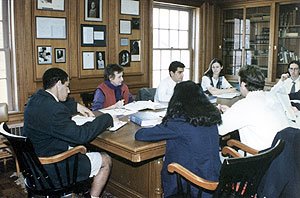
Price himself kept in close contact with the school for the rest of his life and was regularly invited back to address the school. He had a lengthy and lively correspondence with Headmaster Joel B. Hayden, and in his final years he made arrangements to transfer some 3,000 volumes of his personal library to WRA. This decision was prompted by the building of Wilson Hall which would house the enlarged WRA Library.

Plans were also made for a special room to house WRA’s rare books, and this was named in honor of Lucien Price. The Wilson Hall Library was dedicated in 1963, and Lucien Price passed away the following March. Most of Price’s own books were incorporated into the general library collection, but a number of his special volumes were placed in his namesake room.
Over the years, classes were held in the Lucien Price Room, and some classes utilized the collection housed there. With the move to the new John D. Ong Library in the spring of 2000, the Lucien Price Room was phased out, but those volumes that had special meaning for Price can still be found on exhibit in WRA Archives on the lower level of the library.

Tuesday, October 17, 2006

More News about WRA Soccer

As a response to WRA playing its 1000th soccer game this month, we heard from former WRA Athletic Director George Helwig who reported on his early involvement with the soccer movement in Ohio. George came to WRA from Maine in 1960 and discovered there were no other Ohio high schools playing the game. He had to schedule interstate games, so he decided to begin a series of soccer clinics for Ohio high schools to come and learn about the game. As a result of those workshops, some 58 Ohio high schools fielded soccer teams by the time George left WRA in 1974. Before departing, he received an award that described him as "the founding father of the Ohio Scholastic Soccer."

Wednesday, October 04, 2006

Early WRA Alumna Became a Doctor


Doing research for an article on WRA in the 1870s, I learned that Marie A. Singletary, who was one of the first six young women to enter the school in 1873, went on to earn a degree at the old Western Reserve College, moved out to Colorado, taught school, then studied medicine at the college that became the University of Denver. She practiced in Denver well into the 20th century and died there in 1930. She had come to WRA from Streetsboro. Two sisters and a brother also attended our school.

Welcome!!


Welcome to the newest way to stay in touch with Western Reserve Academy's historic past. I'm usually working on several research projects at a time, so please check back often for an update on one of those research topics.